
Check us out on social media
hatfield historical society
  • Home
  • Events
    • Visitors and Workers
  • Collections
    • Foxfire Reports
    • Audio Stories
    • Profiles
  • Resources
    • Transciptions
    • Genealogy
  • Partners
  • Volunteers
  • Blog
  • Contact Us
    • Contact Us
    • Directions
    • Museum Shop
  • DONATE / JOIN
    • Membership
    • Donations
  • Farm Museum CPA
  • Link Page

Ever use a QR Code?

7/18/2013

1 Comment

 
Picture
I have to say it’s helpful when you’re working for a small historical society museum to have a spouse who’s a technology guy. My husband Holly just found a QR code generator called delivr. A QR code (QR stands for Quick Response) is that bar code-like mosaic that you see cropping up on signs and labels. You point your smart device (phone or tablet) at the QR code, and it immediately takes you to a Web location (be it a website, audio or video file, image, etc…) I haven’t paid them much mind because I don’t have a smart device, but I don’t want our museum to miss an opportunity with all those people who are using mainstream technology.

OK, back to my story. I just went to delivr, pasted in our website address, hit ENTER, and generated the code. (Will that really take people to our site?) We took my husband’s smart device, pointed it at the code at right, and straight away it opened up the Hatfield Historical Society home page. It only took a few moments, no joke. And no typing! Check it out.

Now, in addition to putting our web address on our program flyer and event posters, we can add this QR code to make it faster and easier for people to find us.

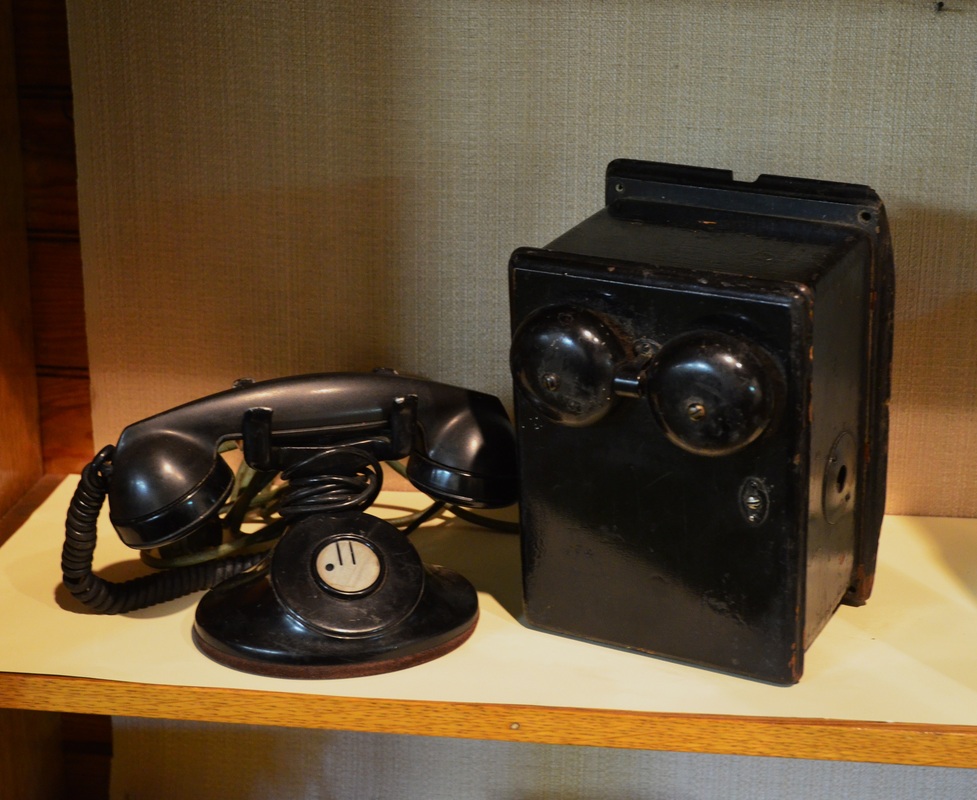
But say I want to use a QR code in the museum to send folks to an audio clip that goes with an artifact – like 102-year-old Mary Riley Pickett talking about the old hand-cranked phone (below) and the “party line” phone system in Hatfield. 
Picture
Picture
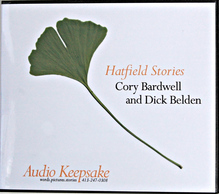
I went to our free audio hosting site SoundCloud (see prior blog post), copied the URL for the audio clip, pasted it into delivr and presto -- here it is.Try it!

We’re also curious to know if e-readers like Kindles and Nooks can read the codes. Let us know how or where you’ve used QR codes, and what you like or don’t like about how they’re used.

* By the way, if you happen to be upgrading your tablet and have an earlier model you’d consider donating to our “cozy” museum (that’s old-fashioned code for not enough room and tight exhibit spaces), we’d love to let our visitors who don’t have smart devices yet (most of them) still be able to access additional stories about artifacts – without taking up more room. (You never know unless you ask...)
1 Comment

Got audio stories?

7/17/2013

0 Comments

 
Picture
We have about a dozen digital oral histories with great stories from local seniors talking about growing up in our Connecticut River farming town in the 1930s and ’40s. You can listen to the full interviews in the museum or borrow the CDs from our library or inter-library system. But what if you don’t live in the area? Or you just want a taste?

I’d been wanting to add audio clips to our website from our series of “Hatfield Stories” interviews for a long time, but didn’t know how to do it. And I was pretty sure we had to upgrade to a paid premium account (on Weebly.com, our free website hosting service) to allow audio files to play. Thanks to my husband, who is always trolling for free applications, I found SoundCloud, an audio hosting site. It’s like YouTube for audio-only.

After signing up for an account (did I mention it was free?), I uploaded my mp3 audio clips and an image (optional), wrote a few lines of intro text, and now we’ve got streaming audio for free. Check it out by clicking HERE.

The wonders of the Internet. Don’t believe those people who say technology is getting in the way of people connecting with people. You can let it do that, or you can use it to bring people together who would never have the chance to meet. You’ll meet some great Hatfield folks by listening to the clips in the link above. Enjoy!


0 Comments

In Praise of Provenance

9/22/2011

 
Picture
It was not until finishing Craig Childs’ Finders Keepers: A Tale of Archaeological Plunder and Obsession* (2010, Little Brown) for the second time (the first time was just for fun), that I could finally put into words why I feel such an attachment to some artifacts in our museum. It is because they have a story.

Childs does a fascinating and thought-provoking job of explaining the immensely complicated world of collecting cultural stuff, mostly buried artifacts, whether held in private collections or public museums. He finds no easy answers, but whether you collect an Anasazi pot from the American Southwest or, in our case, a hand-made wooden shuttle given as a present from a man to a woman (perhaps a father to a daughter?), the value of a piece is greatly enhanced by knowing and sharing where it came from – its provenance.

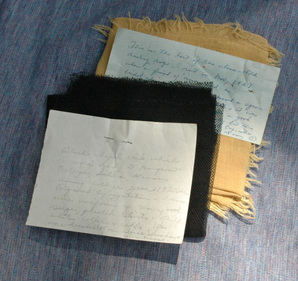
My maternal grandmother Josepha Bushey was the Queen of Provenance. What I’ve found so interesting about going through her memorabilia (she died in Newton, KS, in 1980), is that she left stories with almost every item she saved. Her methods were low-tech (most often a hand-written note pinned to a piece of fabric), but they give us not only a window into her past, but a window into life at an earlier time.


Take this little square of black netting. Alone, it is just a worthless scrap of fabric that might as easily go to Goodwill as to the trash. Instead, I learn from my grandmother’s note that she attended Marymount College in Salinas, Kansas, in the 1920s – and that she had to wear this veil to chapel every day, accompanying her uniform of navy wool serge with a stiff white collar and cuffs. But, she notes, they could wear a dress of their choice on Sundays (after church, that is). That’s a lot of information out of so small and seemingly insignificant an artifact. And she wrote many such notes.

In our museum, we of course have artifacts that bear similar tags – such as “Mary Wait Allis’ neckchief, worn to church when church was in the middle of the road, about 1840.” But for every object that bears that much of a note, we have 10 with nothing more than an item name, collection number and donor.

In most cases we can’t produce an orphan artifact’s provenance now – it is too late. But my grandmother’s anecdotes have made me realize two things: one, that I should start writing notes for my own (and my children’s) keepsakes, and two, that I should try to get stories and context with every new artifact that comes to our museum.

As Child’s says in his book Finders Keepers, “We may be making more archaeology all the time, but once the original context is lost, that story is over.”

*This post will be the first of several that reference Craig Childs’ Finders Keepers, as he raised so many thought-provoking issues relevant to the plight and challenges our local historical museum faces today.


    If you like this blog, subscribe!
    If you'd like to be sent a link each time a new entry is posted (which is periodically), please send an email with the subject line SUBSCRIBE to
    hatfieldhistoricalsociety
    @gmail.com

    Curator's musings...

    As the curator of a small town Historical Society museum, I wonder a great many things. Am I alone in these thoughts that come to me while driving, or exercising, or falling asleep at night? Is it unusual to be constructing displays and writing copy in one's head for an enlarged museum space that does not, as yet, exist?

    If you're wondering about the blog title, "bird by bird," see my First Post for an explanation! Click HERE to read it.

    When I'm not thinking about our museum or rehousing artifacts with my fellow museum committee members, I'm working with our exhibit committee to plan physical or virtual exhibits, and working with our board to help fundraise.

    I invite your comments and reactions.

    --Kathie Gow,
    former curator, 2010-2021


    Categories

    All
    18th Century
    19th Century
    Churches & Religion
    Collections Mgt.
    Conservation/preservation
    Death & Dying
    First Post
    Genealogy
    Graveyards
    Inventory Project
    Local Historical Society Issues
    Mass Militia
    Medical Care In Hatfield
    Moving The Museum
    Old Photos
    Oral History
    Other Museums
    Polish Immigration
    Provenance
    Slavery
    Smith Academy
    Storytelling
    Technology
    Tercentenary
    Textiles
    Wars & Rebellions

    Archives

    September 2023
    September 2022
    May 2022
    August 2021
    June 2021
    March 2021
    October 2020
    September 2020
    August 2020
    July 2020
    November 2019
    June 2019
    May 2019
    March 2019
    December 2018
    September 2018
    April 2017
    February 2017
    August 2016
    February 2016
    January 2016
    November 2015
    October 2015
    September 2015
    April 2015
    March 2015
    February 2015
    January 2015
    November 2014
    June 2014
    March 2014
    January 2014
    December 2013
    August 2013
    July 2013
    May 2013
    March 2013
    February 2013
    January 2013
    November 2012
    September 2012
    April 2012
    March 2012
    November 2011
    September 2011
    June 2011
    May 2011
    April 2011
    March 2011
    February 2011
    January 2011
    December 2010

Proudly powered by Weebly
Photo from Cea.