Introducing a guest blogger – UMASS PhD student Amanda Tewes of Morgan Hill, CA, who’s been our museum intern for the summer. Amanda has used her talents to work on a Hatfield genealogy project for us – and she’s just completed it. It starts in 1970 and stretches back four to five generations. We hope you enjoy her thoughts on the project!
 (click photo for larger image)
 By Amanda Tewes
Growing up in California, most of my peers were first or second generation Californians, as many families did not arrive in the state until the huge midcentury population boom and the national and international migration that ensued. New England experienced this boom much earlier than its Western neighbors, but the change in demographics was just as important to the development of the region. The effects of the influx of new nationalities like French Canadians and Poles to the traditionally Yankee stronghold were felt generations later as Hatfield, Massachusetts, prepared for its tercentenary celebration in 1970.
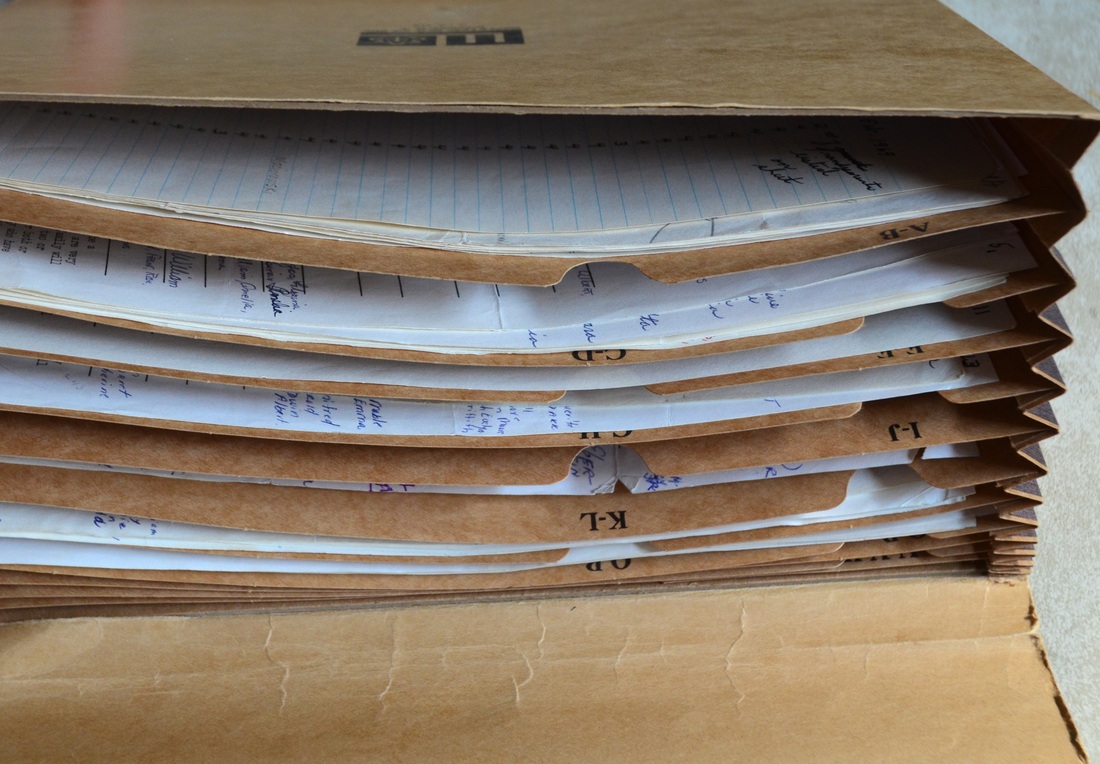
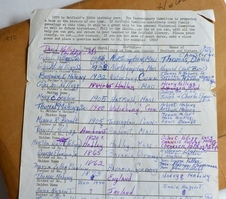
Before its 300th birthday, Hatfield’s Tercentenary Committee encouraged residents to document their family histories with a simple questionnaire asking for the names of relatives, dates of birth, places of birth, and names of siblings going back four generations. Any other information was completely optional and may have required a bit of research on the part of the participating family—no small feat considering many families traced their roots to behind the Iron Curtain.
Growing up in California, most of my peers were first or second generation Californians, as many families did not arrive in the state until the huge midcentury population boom and the national and international migration that ensued. New England experienced this boom much earlier than its Western neighbors, but the change in demographics was just as important to the development of the region. The effects of the influx of new nationalities like French Canadians and Poles to the traditionally Yankee stronghold were felt generations later as Hatfield, Massachusetts, prepared for its tercentenary celebration in 1970.
Before its 300th birthday, Hatfield’s Tercentenary Committee encouraged residents to document their family histories with a simple questionnaire asking for the names of relatives, dates of birth, places of birth, and names of siblings going back four generations. Any other information was completely optional and may have required a bit of research on the part of the participating family—no small feat considering many families traced their roots to behind the Iron Curtain.
 Kellogg Family (click photo for report)
 Most of the completed questionnaires seem to have come from students ranging from kindergarten to high school; however, several entries came from older residents, some of whom also had children in school. This overlap presented some challenges in how to document and display the questionnaires. If a family completed multiple questionnaires, whose would take priority? Additionally, the finished questionnaires came to the Hatfield Historical Museum under the names of the male heads of household. Should we apply the same priority to the fathers or to their children, whose names adorned the top of the questionnaires?
These were just some of the questions we faced when beginning this project. But most importantly, we had to ask ourselves: how do researchers want to use this information? Accessibility is key for local history organizations, and we felt that posting this information online would allow for the largest audience. We grappled with simply scanning the original documents and providing a separate list of participants. However, when I research topics I prefer to have as much information at my fingertips as possible. So after much discussion, we decided to create two spreadsheets: a detailed list transcribing as much of the fifty-seven questionnaires as possible, and one with only the names of the participants and their ancestors. These spreadsheets, along with scans of the original documents, allow researchers maximum benefits of the information in this project.
These were just some of the questions we faced when beginning this project. But most importantly, we had to ask ourselves: how do researchers want to use this information? Accessibility is key for local history organizations, and we felt that posting this information online would allow for the largest audience. We grappled with simply scanning the original documents and providing a separate list of participants. However, when I research topics I prefer to have as much information at my fingertips as possible. So after much discussion, we decided to create two spreadsheets: a detailed list transcribing as much of the fifty-seven questionnaires as possible, and one with only the names of the participants and their ancestors. These spreadsheets, along with scans of the original documents, allow researchers maximum benefits of the information in this project.
 Cady Family (click photo for report)
 Perhaps you are still wondering why the Hatfield Historical Museum should go this far to document and share family histories from the tercentennial. One answer is that in the last four decades, the students who completed these genealogies have grown up, had families of their own, and scattered across the country. Sharing this information online allows these families to reconnect to their Hatfield roots, find long-lost cousins, and flesh out their own genealogies.
But I think there is also another answer. These genealogical questionnaires from the late 1960s tell us not only what Hatfield remembered about its past, but how it remembered its past: through the lives of individual family members. These questionnaire participants made Hatfield’s history personal.
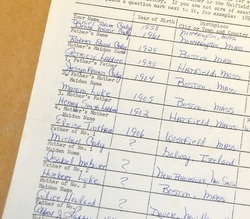
Michael Cady may have been one of many Irish immigrants who found their way to New England in the nineteenth century, but his is the story that matters to his descendants. Helping others find this personal connection is why I am proud to be a part of the Hatfield Historical Museum as we uncover family history from the town’s tercentenary!
But I think there is also another answer. These genealogical questionnaires from the late 1960s tell us not only what Hatfield remembered about its past, but how it remembered its past: through the lives of individual family members. These questionnaire participants made Hatfield’s history personal.
Michael Cady may have been one of many Irish immigrants who found their way to New England in the nineteenth century, but his is the story that matters to his descendants. Helping others find this personal connection is why I am proud to be a part of the Hatfield Historical Museum as we uncover family history from the town’s tercentenary!