Check us out on social media
hatfield historical society
  • Home
  • Events
    • Visitors and Workers
  • Collections
    • Foxfire Reports
    • Audio Stories
    • Profiles
  • Resources
    • Transciptions
    • Genealogy
  • Partners
  • Volunteers
  • Blog
  • Contact Us
    • Contact Us
    • Directions
    • Museum Shop
  • DONATE / JOIN
    • Membership
    • Donations
  • Farm Museum CPA
  • Link Page

Austin Smith and His Cow

8/6/2020

0 Comments

 
By George Vachula

A recent donation to the Hatfield Historical Museum by W. Michael and Judy Ryan includes several early 19th century documents relating to Hatfield and Whately residents. One of these is a letter from Austin Smith of Hatfield to Mr. Beaman Wait of Whately, West Part.

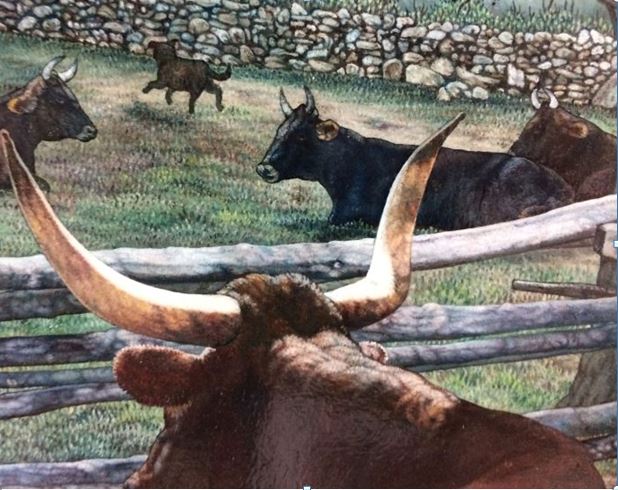
In this letter, dated August 6, 1856, Austin is concerned that one of his cows may have injured herself trying to get over a wall.  Since he has a trip planned to the Springs at Saratoga, he has sent his cow by boy, presumably from a summer pasture in Whately, to Mr. Wait’s farm. Austin asks that she be pastured with Mr. Wait’s steer and heifer and that he watch over the cow and do what is necessary for her. 

Even though in Hatfield Austin was considered a parsimonious neighbor, he was a shrewd investor in stocks and bonds and, as this letter shows, clearly cared for the well-being of his cow.
(Click HERE to read the text of his letter, find out who "Beaman" Wait likely was, and who they were both likely descended from.)
Picture
The painting of heritage cattle is by Monica Vachula.
0 Comments

Piecing Together a Textile Puzzle

7/27/2020

0 Comments

 
Picture
By Meguey Baker, HHM Collections Assistant

Puzzles in the museum need careful work to piece together and understand. It’s easy to look at something quickly and assume the surface is the full story, but that would mean missing large parts of the picture. The Hatfield Historical Museum’s Collections Management & Preservation Grant, funded by the Town of Hatfield’s Community Preservation Act allowed us to put together as many pieces of the story as possible, using original records, research, and careful examination of the objects in the museum. Here’s how that played out in one case.

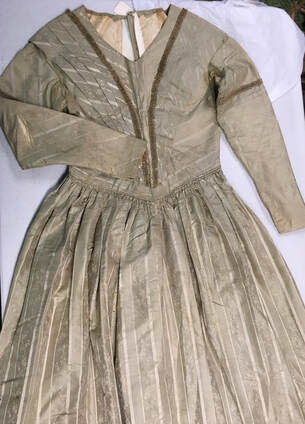
When I unfolded this light tan silk dress, my first impression was of a pre-Civil War dress, likely 1850s based on the construction details. The slender shape of the sleeve, the narrow braid trim and folds of fabric on the bodice, and the cartridge pleats at the waist, (which would accommodate a hoop underneath), are all correct for a woman’s day dress in the decades right before the Civil War, depending on how fashion-forward or reserved she was.
This dress was already connected to the Bardwell family at this point, a family that had been living in Hatfield since the late 1600s. This dress could have been worn in Hatfield in 1850, and saved for the 170 years between then and now.
But once the dress was laid out on the worktable, incongruities came leaping out. Click HERE to find out more about this fascinating textile puzzle.


0 Comments

Raising a Glass in Hatfield

11/24/2019

0 Comments


From Flip, Toddies and Egg Pop Day
to Temperance and Prohibition

By Rob Wilson

One need not travel far in Hatfield to pass a location where some kind of alcoholic beverage was or is brewed, fermented, distilled, served, or sold.
 
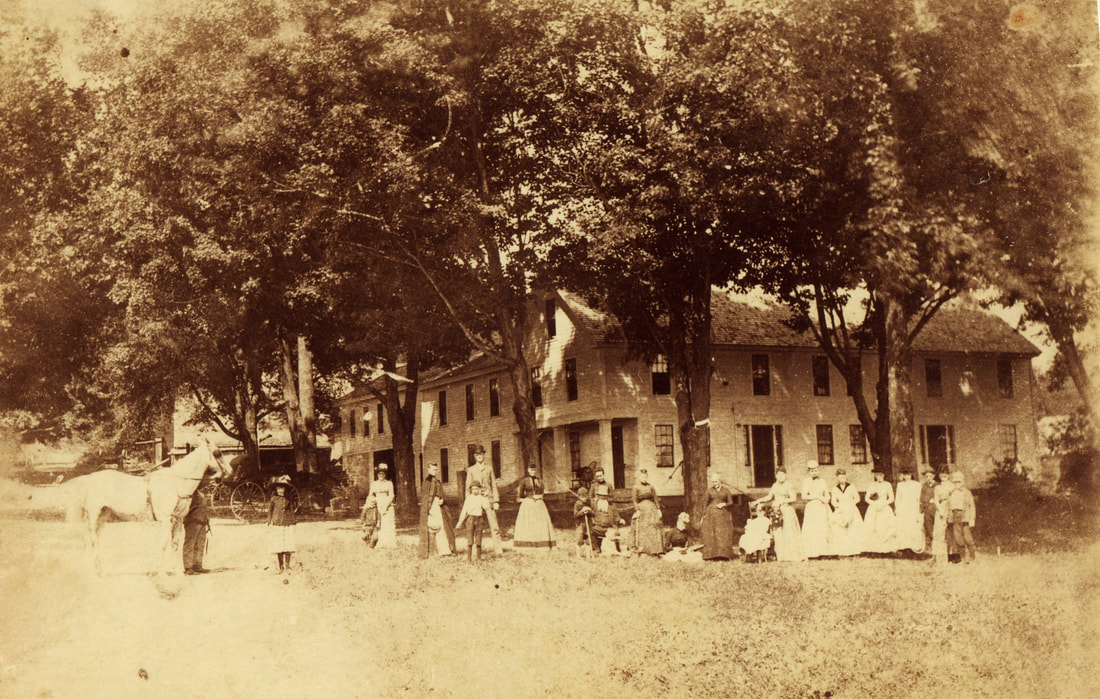
I don’t have to walk a step. The Dickinson Inn, which opened in the early 19th century and burned to the ground in 1901, occupied the spot on Pantry Road where my house now sits. Hungry and thirsty stagecoach travelers would arrive here, perhaps raise a glass of good cheer with their dinner, stay the night, and continue on their journey the next morning.  

Picture
An undated photograph taken at the Dickinson Inn. The Inn, built in the early 1800s, was part of a large farm run by the Dickinson family. It’s likely that some of the alcoholic beverages served with meals at the inn were produced at the farm. (From Hatfield Historical Museum Collection)
The history of Hatfield citizens producing, selling and consuming alcoholic beverages dates to well before the Dickinson Inn opened. In the process of examining life in Hatfield from its 1670 founding to the early 1900s, Daniel White Wells and Reuben Field Wells’ book, A History of Hatfield in Three Parts, documents the social customs of the townspeople, including drinking. Although the early settlers were a religious lot, they saw nothing immoral in raising a glass or mug of their favorite spirits. Many residents, Wells noted, made their own beer or liquor.

To continue reading, about unusual alcoholic drink customs in Hatfield -- some involving children and eggs -- and Hatfield's relationship with liquor until Prohibition, click HERE.
0 Comments

Hatfield Citizens Answer the Call to Serve in World War I

6/8/2019

0 Comments


A Five-Part Series
Part V: Lifelong romance born in a time of war

Guest Post by Rob Wilson
Hatfield Historical Society volunteer

Combat veterans will tell you there is nothing romantic about fighting in a war. But most would agree that wartime romances may begin when soldiers are away from the battlefield. And that romance in a time of war may blossom into marriage.
 
Take the cases of Jim Day and Peter Balise, whose WWI experiences were examined in Parts II and III of this series. Each of the Hatfield men met his bride-to-be while serving in the Army.
To read about their heart-warming stories, click HERE. And let us know what you think after you do. Also, if your parents or family members met during the war, tell us how!
Picture
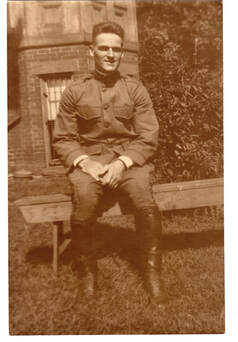
Jim Day sits on a Yonkers, NY, park bench in the fall of 1917, on the day he met the woman who, 14 years later, would become his wife, Marie Morris. (Photo courtesy of Susanne Day)
Picture
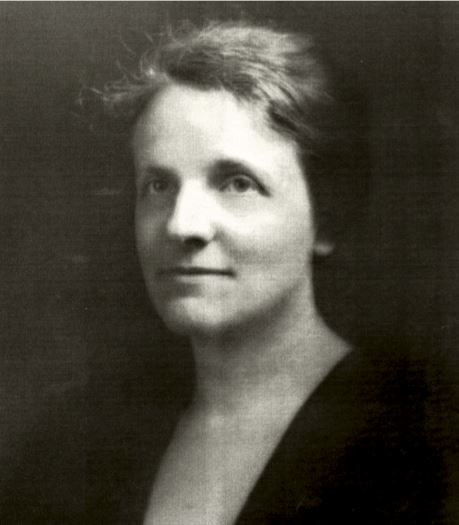
Elma Guest, a 1917 grad of Smith College, would meet her future husband Peter Balise on the platform of a French train station on her way to relief work in Turkey in 1919. (Photo courtesy of Balise Family)
0 Comments

Hatfield Citizens Answer the Call to Serve in World War I

6/3/2019

0 Comments


A Five-Part Series
Part IV: Hatfield veterans receive “royal welcome home”

Guest Post by Rob Wilson
Hatfield Historical Society volunteer

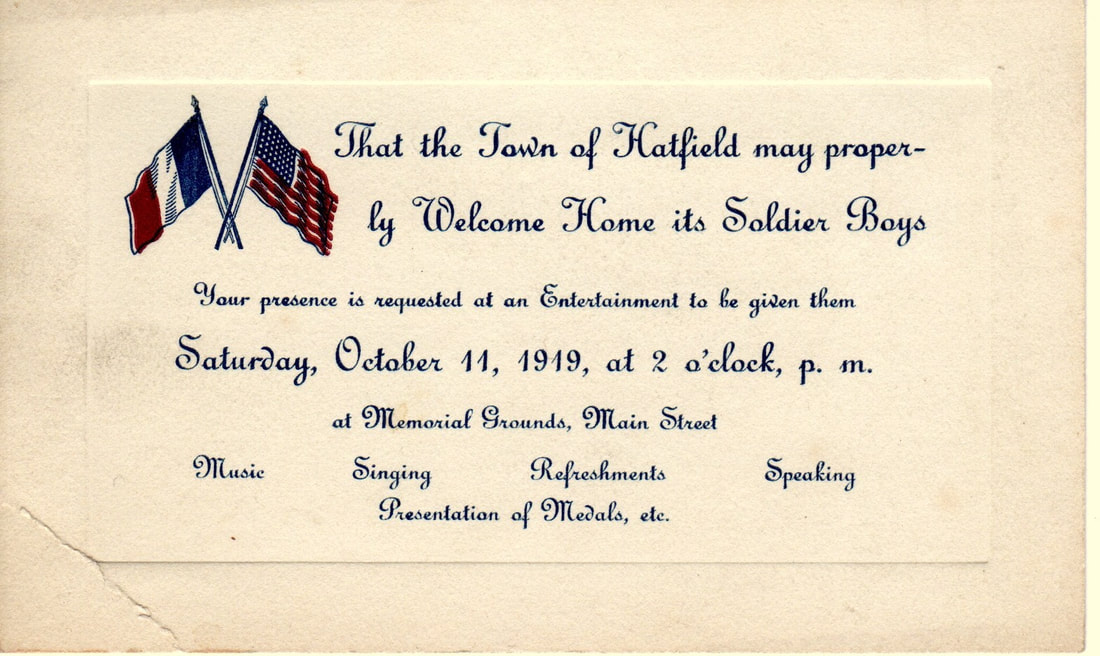
By the fall of 1919, most of the 2.8 million U.S. servicemen stationed overseas had come back home and returned to civilian life or were soon to do so. Across the nation, main streets were bedecked with flags and buildings were strung with bunting, as towns and cities began staging elaborate events to welcome home their veterans. Hatfield staged its veterans’ homecoming program on Saturday, Oct. 11 and, from the Daily Hampshire Gazette’s coverage of the event, the town had spared neither the flags nor the bunting when it decorated its Main Street.
Picture
The entire citizenry of the town was invited to the welcome home event for Hatfield’s WWI veterans and Red Cross volunteer. (From Hatfield Historical Museum Collection)
Residents gathered at 2 p.m. for the program, held at Memorial Grounds on Main Street. The Gazette’s reporter described the festivities as “a royal welcome home celebration at which the population turned out not only to the last man but also very nearly to the last woman and child, many of the latter in their mothers’ arms.” Fifty-three men and one woman among the 103 citizens who had answered the national call to serve were able to attend the ceremonies. Many of those unable to make it, some of whom were still serving in the military or had moved out of the area, sent regrets from far-away places.
To continue reading this post, click HERE.
0 Comments

Hatfield Citizens Answer the Call to Serve in World War I

6/3/2019

0 Comments


A Five-Part Series
Part III: Into the trenches and “over the top”

Guest post by Rob Wilson
Hatfield Historical Society volunteer

When the officer leading the U.S. Army’s 9th Infantry Regiment’s Company L was killed in the Battle of Saint-Mihiel in mid-July, 1918, Lt. Jim Day was given a battlefield promotion to captain and put in command of the outfit. He now was responsible for leading men into combat. One of his best friends, promoted to the captain of another front-line company the same day, later was killed. Day reported that he wrote a condolence letter to the soldier’s family, not the last such letter he would compose during the war. 
 
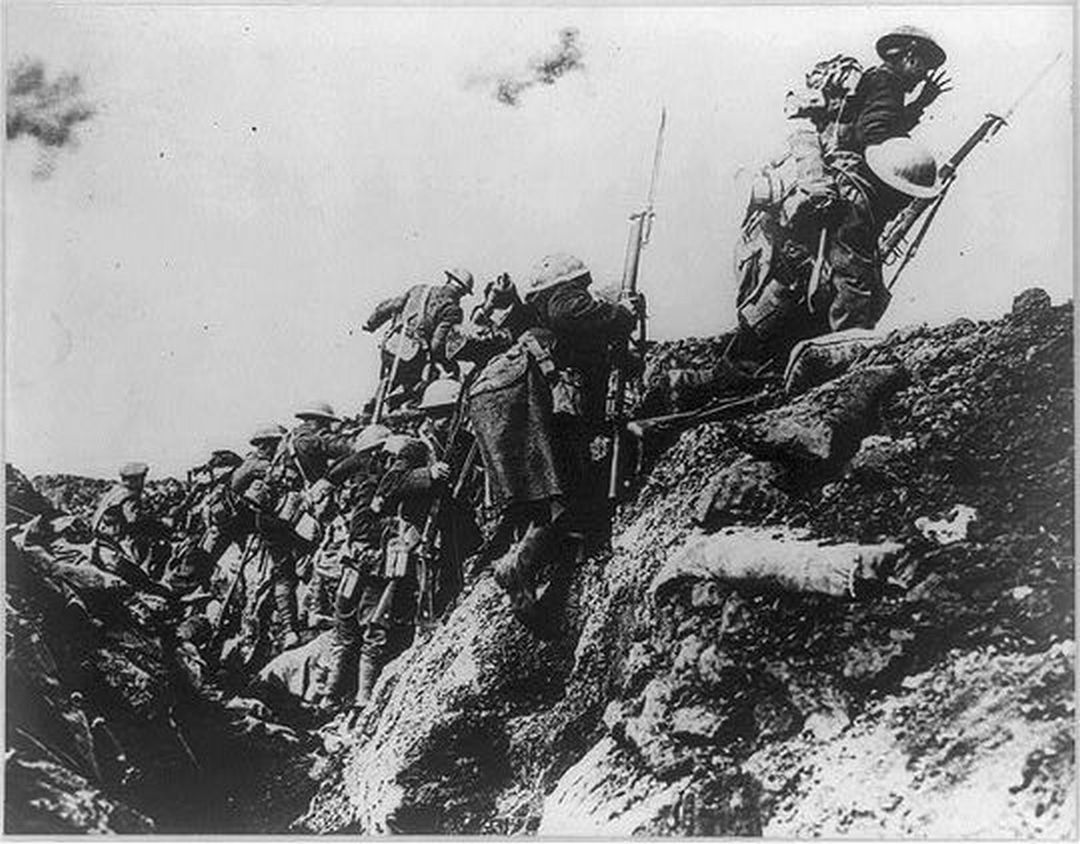
The U.S. forces kept up pressure on the German lines that summer. The enemy was well entrenched and resolute. Battles were hard fought, casualties high and progress slow. In a Sept. 12 operation, Day wrote, the “whole horizon erupted in flames” when the U.S. artillery opened up on the enemy. When the barrage halted, at daybreak, he led Company L, as he put it, “over the top” of the trenches to attack German positions. The operation was a success and Day’s unit took many prisoners.
Picture
Allied troops go “over the top” on the Western Front during WWI (Library of Congress)
To continue reading this post, click HERE.

In addition to Day, Balise and the others from Hatfield who served overseas and have been profiled in this series, we have compiled partial histories about 14 additional Hatfield men and one woman who served. To view those profiles, click HERE.
0 Comments

Hatfield Citizens Answer the Call to Serve in World War I

6/3/2019

0 Comments


A Five-Part Series
Part II: Over there: Off to France and the Western Front

Guest post by Rob Wilson
Hatfield Historical Society volunteer

James H. Day and Peter L. Balise grew up in Hatfield, joined the Army in 1917 after the United States entered the war, and were wounded fighting on the Western Front. Both men also wrote about their experiences in France. But it is thanks to the cooperation of the soldier’s descendants, who shared documents, photographs and artifacts with the Hatfield Historical Society and the Hatfield Historical Museum, that we are able to tell their stories here.
Each account delivers valuable insights into the men, the war they fought, the emotions they experienced and the challenges they and other troops faced on the front lines of World War I. Of the two soldiers’ writings, Day’s narrative—in the form of an unpublished war memoir written decades after the war and saved by his family—is much longer and more detailed. Balise’s story, conveyed in three letters that he wrote to family from France, examines his first months in France and the last days of the war. Those letters were published over 1918 in the Daily Hampshire Gazette. Additional articles in the Gazette and the Springfield Union provided additional information about both men.
To continue reading post, click HERE.

In addition to Day, Balise and the others from Hatfield who served overseas and have been profiled in this series, we have compiled partial histories about 14 additional Hatfield men and one woman who served. To view those profiles, click HERE.
0 Comments

Hatfield Citizens Answer the Call to Serve in World War I

5/27/2019

0 Comments


A Five-Part Series
Part I: Over Here: A “far away” war comes home

Guest post by Rob Wilson
Hatfield Historical Society volunteer

​​The British called it “The Great War.” It started in Central Europe, in the early summer of 1914. The fighting grew in intensity and spread into Africa and Asia, with France, Britain, Russia and their assorted allies opposing Germany, Austria-Hungary and the Ottoman Empire. Under President Woodrow Wilson’s leadership, the United States remained neutral and Americans mostly went about their normal lives.
 
All that changed on April 6, 1917, when the United States entered the fray on the side of France and her allies. Here in Hatfield, routines were disrupted and lives changed as citizens braced for what newspapers now referred to as “The World War.” As town resident James H. Day, known to family and friends as "Jim," would observe in a memoir written years later, Americans suddenly realized that a war seeming “far away and little in our minds… was coming home to us.”
Picture
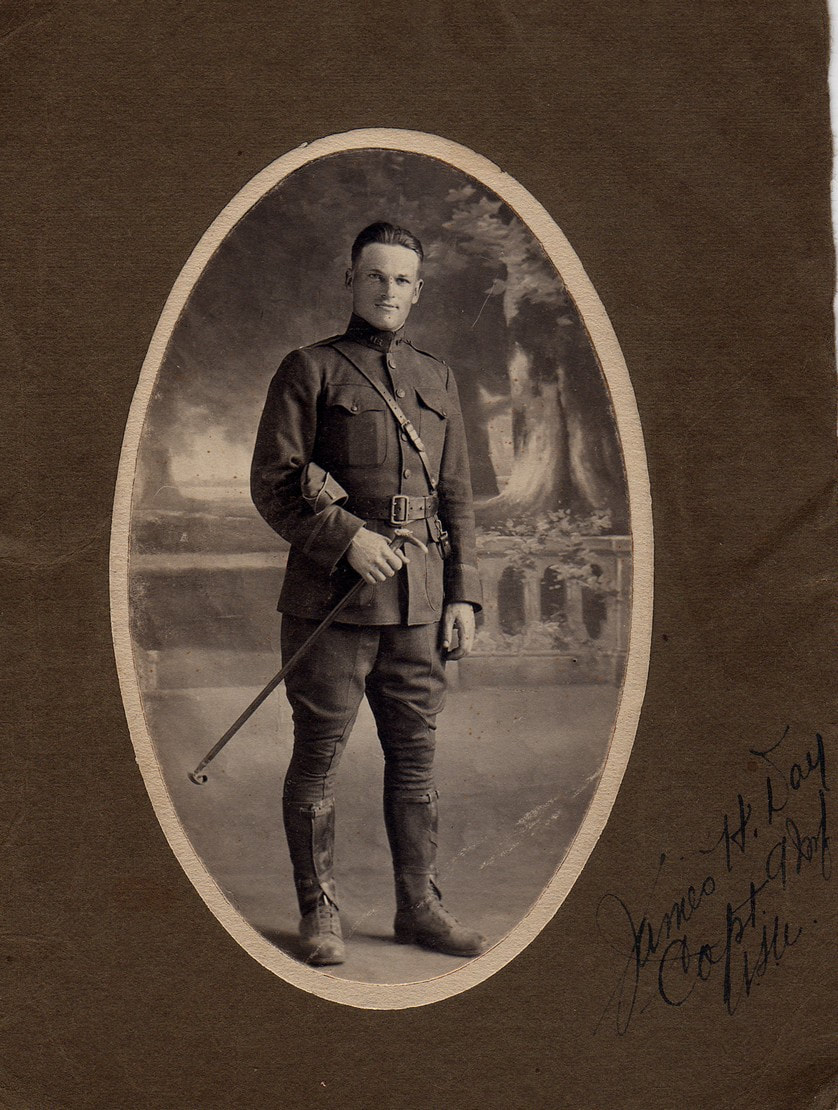
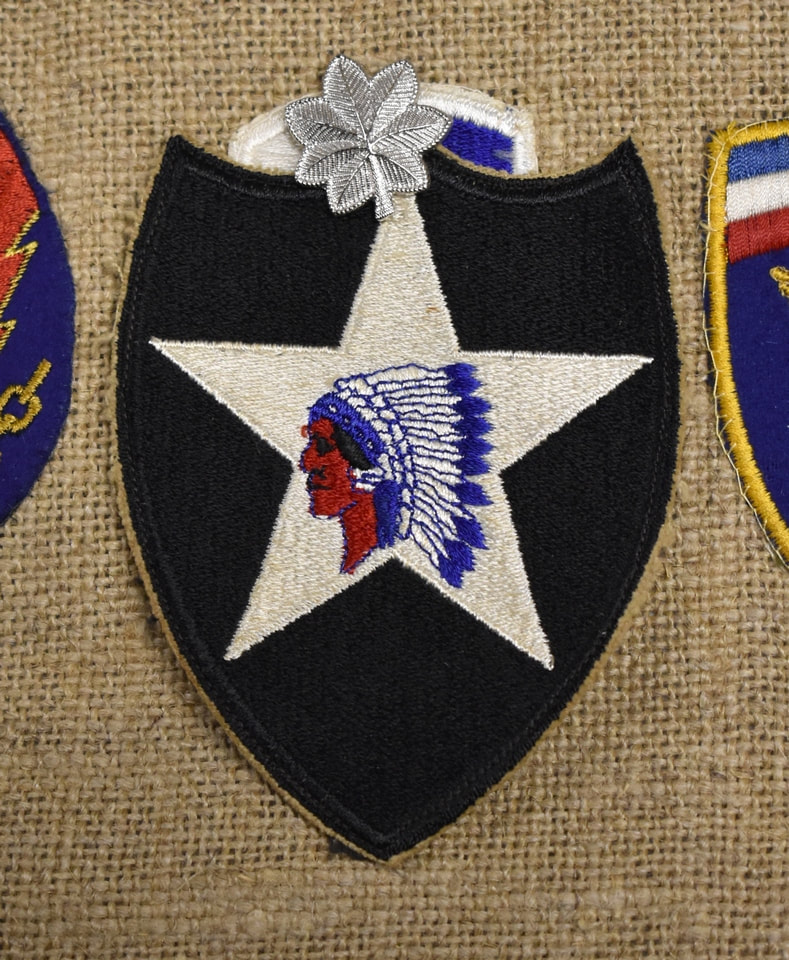
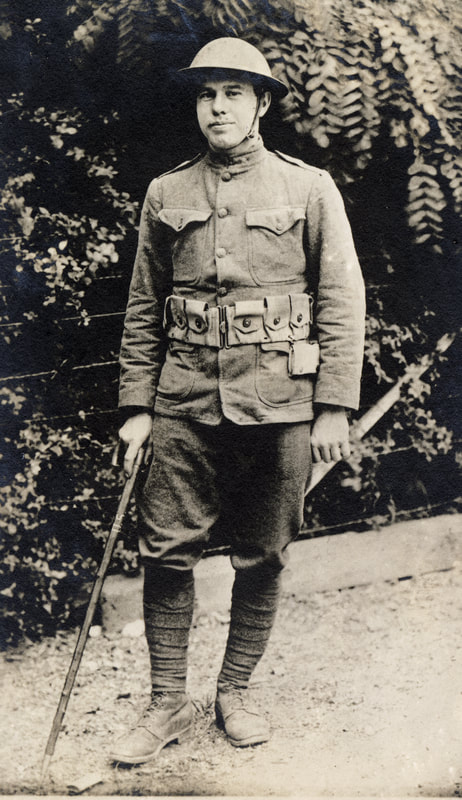
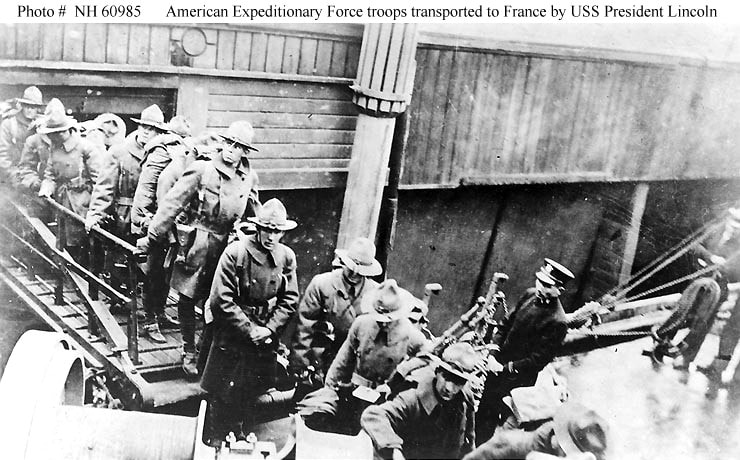
​Despite the fact that he had never considered military service, the 22-year-old senior at Massachusetts Agricultural College volunteered for the army six weeks later. Day trained over the summer in Plattsburg, NY, received a lieutenant’s commission and, in September, shipped out to France. The young officer served in the 9th Infantry Regiment, 2nd Infantry Division. By the time the war ended, 14 months later, he had been wounded in action, earned six combat decorations and climbed to the rank of major. 
Picture
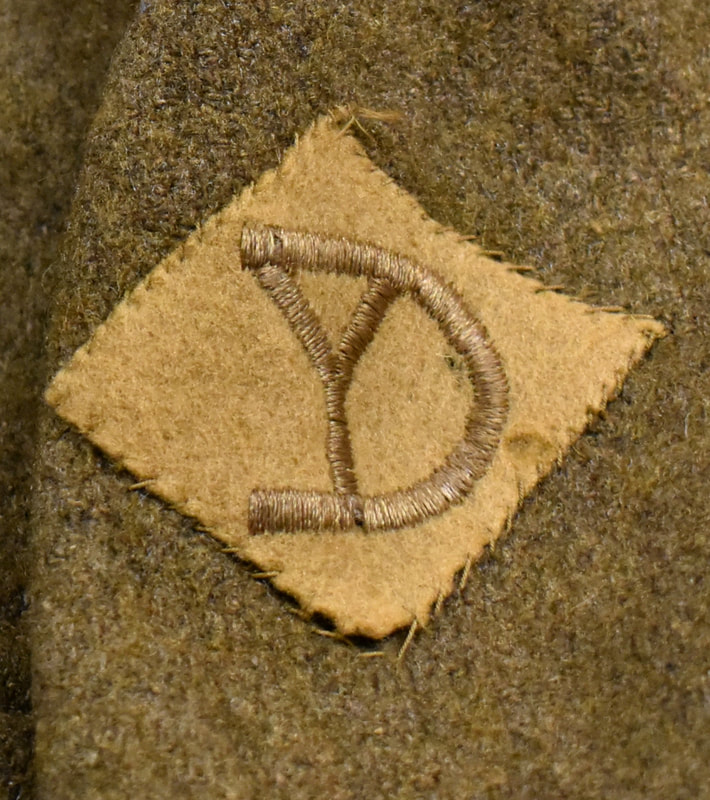
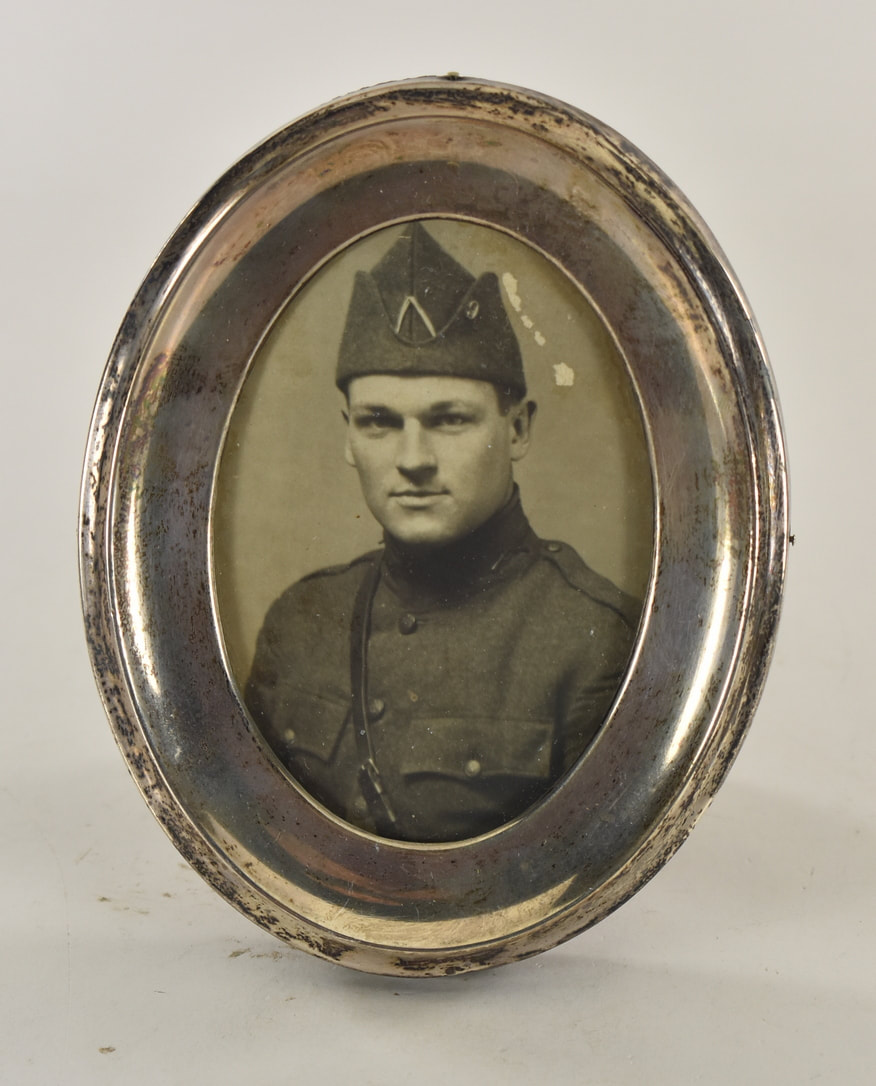
Jim Day (pictured above) was among the 2.8 million Americans who crossed the Atlantic to serve in Europe. He was a lieutenant when he arrived in France to serve with the Army’s Second Infantry Division — nicknamed the Indianhead Division. (Day image courtesy of Susanne Day Arnold.)
To continue reading, click HERE.
0 Comments

Real or repro? What to display and what to “fix”?

3/6/2019

0 Comments

 
Picture
I just read an article from The Washington Post Magazine (Feb. 27, 2019, thanks AASLH), titled “The Imitation Game: Some of the most beloved objects in Washington museums are not as authentic as visitors might assume.”

This article struck a nerve because of two discussions I had this week regarding OUR museum.

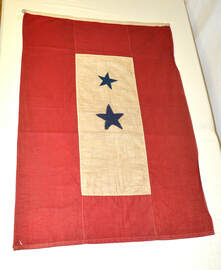
The first was with fellow staff for our upcoming World War I exhibit on whether or not to hang our World War I service flag (or blue star flag). Folks would hang the flag in their window to let others know they had family members serving in the war (see earlier post about service flags HERE). The flag has some wear lines and holes near the bottom, and it was our textile specialist’s concern that hanging for a year or more could risk expanding those holes.

Instead, perhaps we mount the flag on a slant board covered with archival fabric, as we’re doing for another more fragile textile in the exhibit (Marion Billings' Victory Dance dress), BUT, we don’t have a safe place to position a slant board where we need it.


We could photograph the flag and pay to have it reproduced poster size and mounted on foamcore -- and hang that. That would still give us the deep shot of color amidst the army green and dark metal helmets and show a copy of our local flag, not just an image pulled from the Internet.

Or maybe we could buy a repro flag from ebay for not too much money, suggested Meg Baker, our textile specialist, and not worry about light or hands touching it.

Yet, here's the thing: we have the ACTUAL flag that was displayed in a window by a Hatfield family, the Bardwells, representing their sons Homer and Curtis serving in the war. If this flag is not displayed now, for our WWI exhibit, then when? This is it’s time in the sun!

OK, bad metaphor, especially since one side is quite faded from prior light damage -- probably from hanging in the Bardwell’s window. For the record, we have UV-blocking tubes on all our fluorescent lights and no direct sunlight would reach the flag.


These are the sorts of discussions that go on all the time when making museum display decisions -- balancing the value of showing the public authentic artifacts against the responsibility to preserve those artifact for the future.

Here’s what we decided -- at least for now. Hang the real flag on archival fabric for the opening on Memorial Day Weekend and through July 4. But for the remainder of the exhibit, replace it with a poster-sized reproduction on foamcore, noting why we made that decision.

Picture
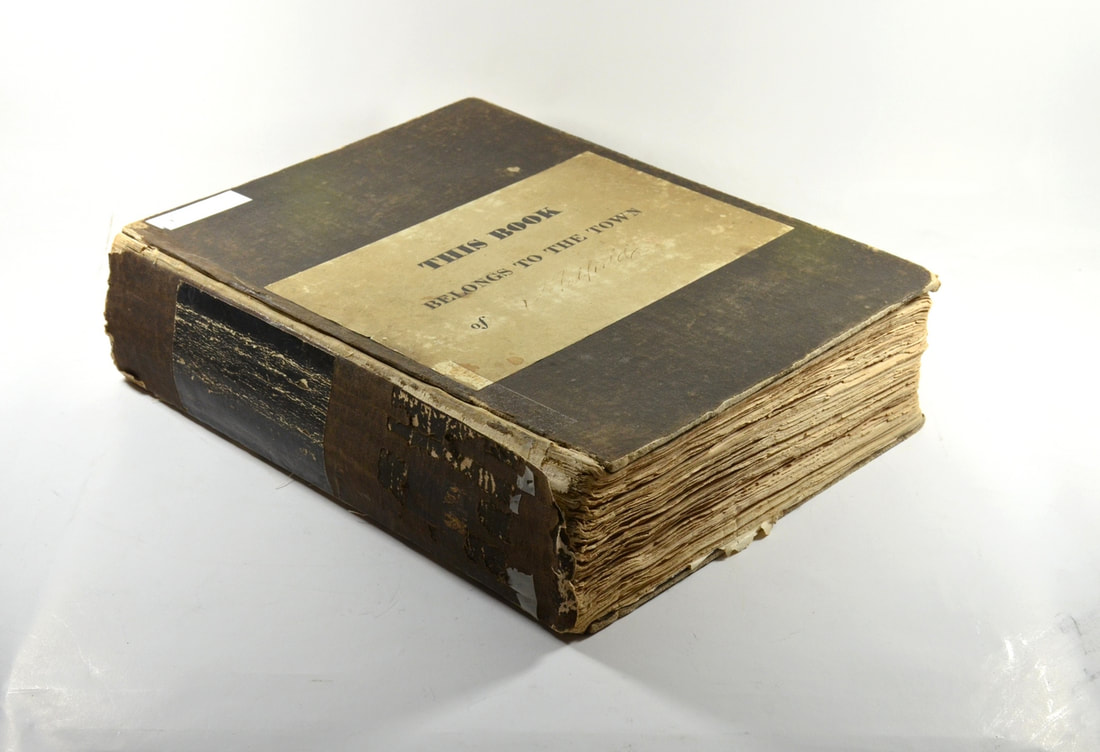
That was the first discussion. The 2nd one, via email, was with local bookbinder John Nove, who is doing repair work on a group of our museum books. In this case, he proposed repairing a tear and making a pocket to hold the somewhat brittle misfolded map attached to the back of Edward Hitchcock’s 1841 Final Report on the Geology of Massachusetts in Four Parts. We decided to do that because it would better preserve the map and make it possible to unfold and view without hurting it further.

He also asked if he should remove the library pocket and card (with no entries), not on the last page, but 2 pages inside the back cover, especially since the book was marked elsewhere as “Reference, not to be taken out.”


Once confirming the library pocket was not hurting the book or the map, I asked him to leave the library pocket alone, as it helps tell the story of this particular book -- however confusing a story that may be.

Artifacts often mirror life in that way -- confusing and messy. But sometimes their circuitous journeys are also what draw us in.

0 Comments

Clues in the clothes: using observable details to determine rough dates for photographs

3/5/2019

0 Comments

 
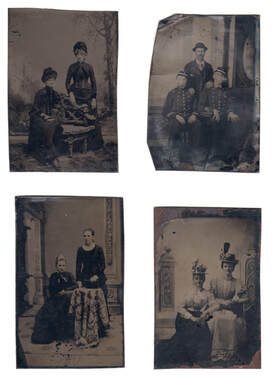
PictureTintypes donated by Ed & Marsha Molloy, found when living at 121 N. Hatfield St.
Guest post by Meguey Baker
Last day as Collections Assistant, Hatfield Historical Museum.
(Meg's contract has ended and we are sorry to see her go!)


One of the challenges about working in museum collections is the process of figuring out the pieces of the puzzle that you don’t have. Artifacts come in, or are found in collections, that tell a part of the story, but not the whole story. So we have to do the research we can based on the clues we have, to expand that story as far as possible without crossing the boundary into conjecture.

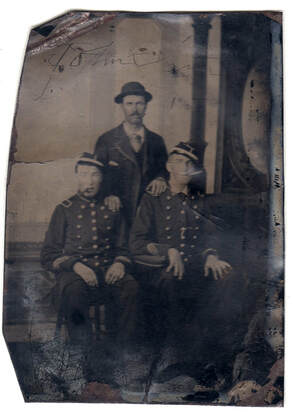
Photographs pose a particular puzzle, as sometimes they come in with very little evidence at all. There is only one piece of data here, the name “John” scratched into the face of the photo of the three men, with an “L” beneath it and some additional letters to the right, possibly “Sam” or “Son” or “Som”, and a very faint smudge of what might be a date.

With our modern world being so very full of cameras, on every cell phone as well as other formats, it’s worth remembering that not very long ago, getting one’s photograph taken was rather a big deal, and happened far less frequently, in part because of the trouble and expense involved. One would think that would lead to more careful notation of who is in the photo, and why it was taken; for that, I challenge you to go look at your own childhood photos and see if there is any notation on them. If there’s not, it’s a great time to grab an archival pen and add a few notes to the back; future museum workers will thank you!

Without that first-hand data, of who is in the photo, at least roughly when it was taken, and why, we are back to research and following the leads in the picture itself. When this set of photos came into the Hatfield Historical Museum, we had very little to go on, other than the house location where they were found (121 North Hatfield Road). Here’s where the research took us.


Tintypes first patented in U.S. in 1856

The first step is to narrow down the dates for the type of photograph. These are black and white (or more correctly very dark gray and cream or tan) prints on thin blackened metal sheets. Tintypes like this were first patented in the United States in 1856, but had been patented in France for a few years prior,
so the technology was known by 1855. We can use that as our earliest possible circa date. The technique did not actually usually involve tin, but very thin sheets of blackened iron, cut with tin-snips.

A more expensive technique developed in the 1830s, daguerreotypes, required silver-washed copper and a protective glass cover; tintypes were cheaper and the image didn’t disappear at certain angles. If you look carefully at the photo of the three men, you can see an oval of wear on the sheet, where a frame or glass cover has rubbed at the bottom left and protected the tops of the center columns on the painted background from fading as much as the parts that would show through the frame. This also helps account for the uneven edges; it wasn’t meant to show to the edge, it was meant to be in a nice little frame, like the ‘books’ that daguerreotypes made so popular.

Given the dates of technology origin, and hazarding to guess they were taken in America, we can settle on 1855 or after for the whole lot. We could stop there! Tintypes peak in popularity just before the Civil War, but remain around up to the early 1900s, increasingly as a novelty, like photo-booth photos are today. However, if we want to try to dig a little deeper, we can examine the clothes for hints. Each era in history has at least a few distinct silhouettes, and certain things, like hoop skirts and zippers, have extremely clear start dates. Let's look at them in order, by the clues in the clothing.

Picture
The most obvious is the military attire on the two younger men. This type of button pattern, with the center line and the two outer lines that curve out from the waist and back in towards the neck, occurs in a very few places: private military academies in the 1860s, in which case there is generally a great deal of decorative braid, often in contrasting colors, and the New England Militia in the 1860s, which had no such braid.

The decorations on the young men’s jackets also include shoulder boxes, indicating they are Lieutenants in the U.S.  Army, and they have inverted chevrons on the sleeve cuffs we can see -- the boy on the left has two, the boy on the right has three. If these are measures of rank, the boy on the left is a corporal and the boy on the right a sergeant. All this is slightly confusing -- how wonderful it would be if someone had taped a little note to the back of this metal plate, with the date, names and ranks of these boys on it!


Why have I switched to calling them boys, instead of young men? Look at their faces and the positioning of their bodies. These are young, very young, men. The cigar that seems reasonable in the mouth of the mustachioed man behind them looks unfamiliar in the mouth of the boy on the right, and ridiculous in the mouth of the boy on the left. The positioning of the older man’s hands on the boys shoulders is also intentional, not just to hold them steady, but to indicate relationship. Using the clues in the technology and the clothing, we can deduce a possible reason for this photo shoot: these young men are off to the Civil War, which started in 1861, and swept up so many young men and boys.

Picture
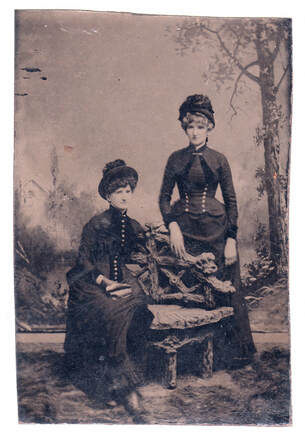
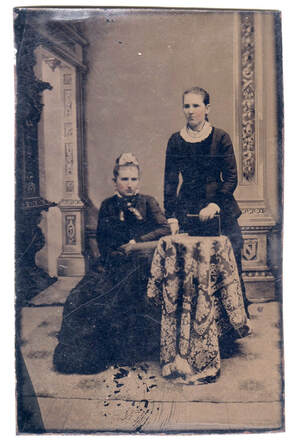
Next, let’s look at the women in the dark two-piece dresses, with tight-fitting bodices, buttons up the front and their hats on the backs of their heads. So many clues! The sleeves are very snug, but with a natural shoulder, which marks it as post-1870, as the pre-Civil War shoulder was very low off the shoulder, with a wider sleeve.

The large full skirts of the 1850s and 1860s are gone, and the buttons and trim on both women’s bodices are heavily influenced by military uniform styles. Given the very upright postures of both woman, there is boning in the bodices, and very likely short corsets.

It’s unclear if there is a bustle on either dress, but from the way the skirt on the seated woman is pulling, we can estimate the fullness of the fabric, and deduce that it’s an A-line style skirt with a ruffle at the hem, with an overskirt that adds a draped front. The rustic bench and backdrop of trees implies an outdoor theme, and so they are wearing their hats. The hats are dark straw, and have dark feathers and ribbons, secured with hat pins instead of ribbon ties. Hatpins were first made commercially in the 1850s, and widely adopted following the Civil War, remaining a constant in women’s accessories until the first World War, when the demand for metal affected every aspect of life. All of this points to a circa 1870 date for the ladies in dark hats.


Picture
The second picture of ladies in dark dresses, with a little table, shows women wearing the Basque waist, which extends below the waist down to the hips, and lends a slight forward slope to the torso. A precursor of the Edwardian S-shape torso, this silhouette has a more relaxed sleeve, a natural waist, longer boning and slightly longer skirts.

As this is an indoor setting, and these are young ladies, they have minimal hairdressing -- braids and ribbons, and white collars to set off the dark fabric.  All of this points to a circa date of 1880.

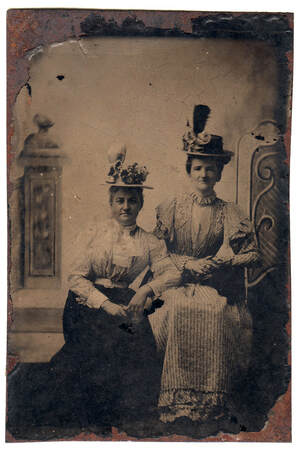
The last photo (below) is significantly later, with women in separates with hats square on their heads.


Picture
There is extra fullness in the upper arm, but as it tapers to the cuff instead of going sharply from full in the upper arm and tight in the lower arm, we can date these fairly closely.

The woman on the left wears a dark skirt and light blouse, with a soft pale cravat, which points to the menswear influence of 1900. But the layers of lace on the lighter two-piece dress on the woman on the right is closer to the 1905-1910 bodice.

The light straw hats with very upright plumes in wide ribbon hat bands are very 1900s "girl-on-the-go," but hats vary dramatically as a personal expression throughout the 1890s to 1910. So, we could say that this is a picture of two friends, one of them wearing an old favorite outfit and one wearing a newer fashion, but certainly within scope of a 1905 circa date.


By carefully examining the details in the clothing, we can bring these four photos from “after 1850” to a more precise chronological timeline, and make some inferences about the people shown. Still, it would sure be helpful if there was a good clear pencil notation on the back, or notes that had come down with these over the last 150+ years.

Author
Meguey Baker studied early American textile history and material culture at Hampshire College. She is a member of the Mohawk Trail Quilt Guild, on the board of the Historical Society of Greenfield, and does textile repair and conservation for private clients.

0 Comments
<<Previous
Forward>>
    If you like this blog, subscribe!
    If you'd like to be sent a link each time a new entry is posted (which is periodically), please send an email with the subject line SUBSCRIBE to
    hatfieldhistoricalsociety
    @gmail.com

    Curator's musings...

    As the curator of a small town Historical Society museum, I wonder a great many things. Am I alone in these thoughts that come to me while driving, or exercising, or falling asleep at night? Is it unusual to be constructing displays and writing copy in one's head for an enlarged museum space that does not, as yet, exist?

    If you're wondering about the blog title, "bird by bird," see my First Post for an explanation! Click HERE to read it.

    When I'm not thinking about our museum or rehousing artifacts with my fellow museum committee members, I'm working with our exhibit committee to plan physical or virtual exhibits, and working with our board to help fundraise.

    I invite your comments and reactions.

    --Kathie Gow,
    former curator, 2010-2021


    Categories

    All
    18th Century
    19th Century
    Churches & Religion
    Collections Mgt.
    Conservation/preservation
    Death & Dying
    First Post
    Genealogy
    Graveyards
    Inventory Project
    Local Historical Society Issues
    Mass Militia
    Medical Care In Hatfield
    Moving The Museum
    Old Photos
    Oral History
    Other Museums
    Polish Immigration
    Provenance
    Slavery
    Smith Academy
    Storytelling
    Technology
    Tercentenary
    Textiles
    Wars & Rebellions

    Archives

    September 2023
    September 2022
    May 2022
    August 2021
    June 2021
    March 2021
    October 2020
    September 2020
    August 2020
    July 2020
    November 2019
    June 2019
    May 2019
    March 2019
    December 2018
    September 2018
    April 2017
    February 2017
    August 2016
    February 2016
    January 2016
    November 2015
    October 2015
    September 2015
    April 2015
    March 2015
    February 2015
    January 2015
    November 2014
    June 2014
    March 2014
    January 2014
    December 2013
    August 2013
    July 2013
    May 2013
    March 2013
    February 2013
    January 2013
    November 2012
    September 2012
    April 2012
    March 2012
    November 2011
    September 2011
    June 2011
    May 2011
    April 2011
    March 2011
    February 2011
    January 2011
    December 2010

Proudly powered by Weebly
Photo from Cea.